
A forensic scientist from Staffordshire University in the UK is helping investigators on the River Danube build stronger cases against sturgeon poachers.
Professor Claire Gwinnett, who specialises in forensic and environmental science, has been training police, prosecutors and conservation professionals from Romania and Bulgaria to treat wildlife crime scenes the way investigators treat scenes involving people.
A lucrative crime that rarely reaches court
Sturgeon poaching is a growing global problem, fuelled by demand for caviar. A single adult beluga sturgeon can be worth around €20,000, and the trade is often tied to organised crime. Poached roe is frequently repackaged to pass as farmed caviar, which makes it very hard to trace back to the original offence unless suspects are caught in the act.
The numbers show the gap. According to WWF figures, Romanian authorities recorded 235 cases of illegal activity involving sturgeon over ten years. In the last five years, only 31 criminal files were opened, and just 24 ended in convictions.
Training on both sides of the border
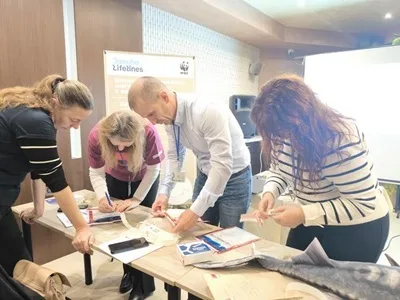
Gwinnett worked with DANUBElifelines, a Horizon Europe-funded project to protect migratory fish and restore habitats across the Danube Basin, along with WWF Romania and WWF Bulgaria. Together they ran a wildlife forensics workshop for 40 professionals from prosecution, policing and conservation.
The sessions combined forensic theory with hands-on practice in documenting, collecting and packaging evidence. Gwinnett stressed that poorly packaged evidence often loses its continuity and integrity, which weakens a case before it reaches court. She also pointed to the difficulty of policing a river border and the Danube Delta, and called for closer cooperation between agencies, including border control.
Even submerged hooks can be evidence
Poachers commonly use long lines of large hooks, and some resort to explosives or electrical devices to kill fish. Participants learned that hooks can carry fingerprints, DNA and trace evidence, and that suspects’ hands or clothing may hold explosive residue.
Stoyan Mihov of WWF Bulgaria said the biggest takeaway was realising that hooks recovered after months underwater can still yield evidence, turning equipment once seen only as a sign of the crime into a way to identify offenders. George Caraca of WWF Romania noted that authorities are keen to learn how to manage sturgeon crime scenes so that well-documented cases can move through the justice system.
Kits for those on the ground
As part of the wider initiative, 100 wildlife crime scene kits will be given to rangers, police and other frontline professionals so they can apply what they learned.
Gwinnett, who helped set up the Wildlife Forensic Academy in South Africa and the European Wildlife Forensic Network, said illegal fishing is a serious threat to sturgeon that few people are aware of. She said that raising awareness and working together offer the best chance of protecting the species.