
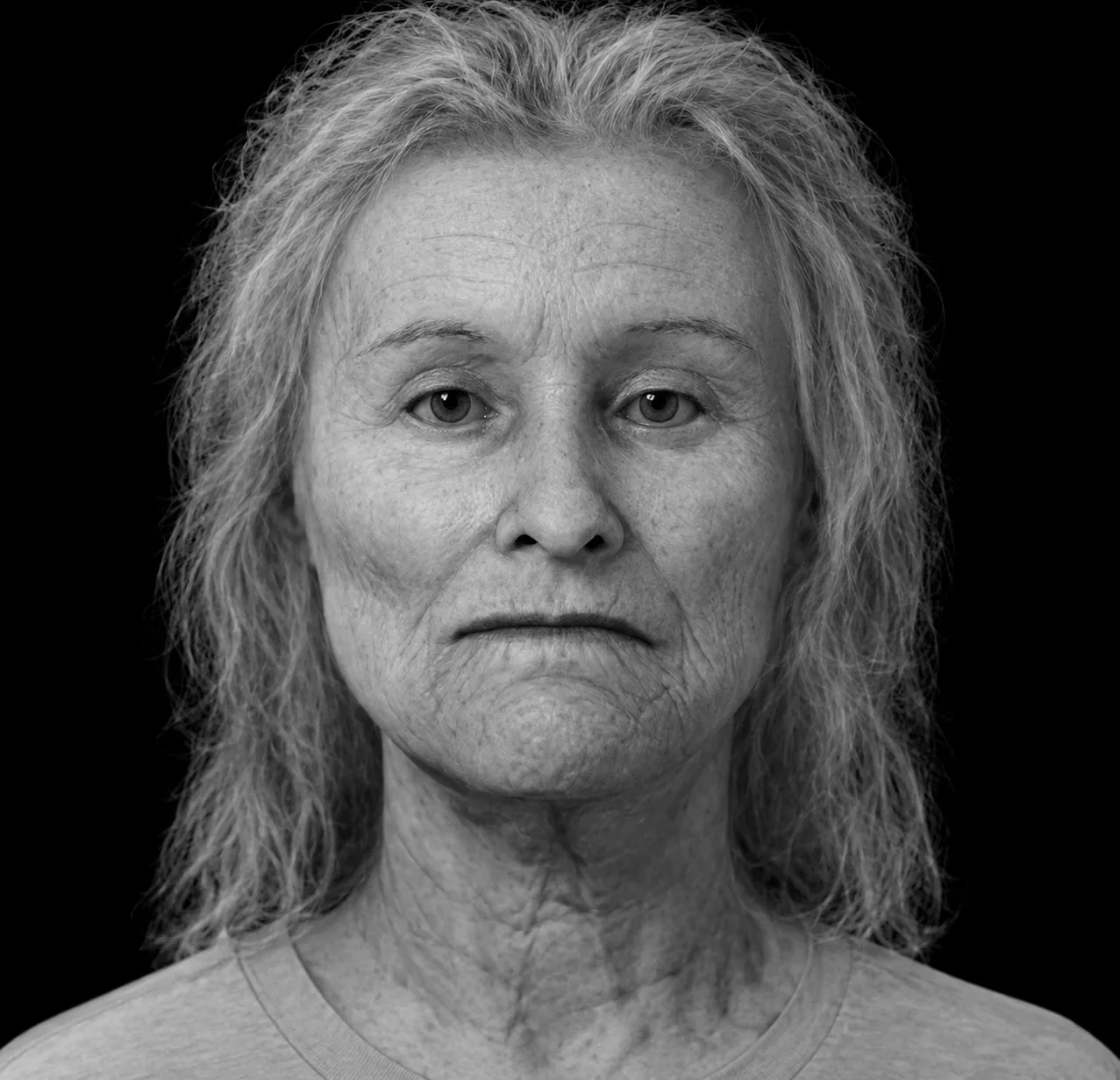
Liverpool, United Kingdom| Merseyside Police have released a 3D facial reconstruction of an unidentified woman whose body was discovered inside a black bin bag in Stanley Park, Liverpool, as investigators seek public assistance in identifying her.
The woman's remains were discovered on 28 August 2026 in bushes within the park's walled garden. Investigators subsequently established that the bag had first been sighted on 13 July, approximately six weeks before the discovery.
Despite witness appeals, CCTV enquiries and forensic examinations, authorities have been unable to establish her identity.
3D Facial Reconstruction Using Forensic Techniques
To support the identification process, Merseyside Police collaborated with Face Lab, a research group at Liverpool John Moores University specialising in craniofacial analysis, facial depiction and forensic art.
The team used a 3D computerised facial reconstruction system to create an approximation of the woman's appearance. According to Professor Caroline Wilkinson, Director of Face Lab, the reconstruction followed anatomical and anthropometrical standards, with the final depiction completed through digital image editing.
The woman is believed to have been between 60 and 80 years old, approximately 5 feet 2 inches tall and of slight build. She was found wearing a pink Nike T-shirt.
DNA and Dental Identification Challenges
Forensic examinations successfully established a DNA profile, but investigators reported that it did not produce a match in the national DNA database.
Dental identification was also unavailable because the woman had no teeth. Further examinations established that she suffered from osteoporosis, chronic obstructive pulmonary disease (COPD) and arthritis affecting her hands. She was also malnourished, although investigators have not established whether this resulted from her age or possible neglect.
Police Appeal for Public Assistance
Detective Superintendent Rachel Wilson said investigators hope the reconstructed image, combined with the woman's physical description, clothing and medical conditions, will help someone recognise her.
Police are appealing to anyone who may have seen the woman before 13 July 2026 or possesses relevant information to come forward.
The investigation remains ongoing, and the woman's identity has not yet been established.
Forensic Perspective
This case demonstrates the application of forensic facial depiction in identifying unknown deceased individuals when conventional identification methods prove unsuccessful.
Three-dimensional facial reconstruction can provide investigators with a visual representation that may stimulate recognition among members of the public. However, such reconstructions are approximations and cannot independently establish identity. Any potential identification must be corroborated through reliable evidence, including DNA, fingerprints or other recognised identification methods.