
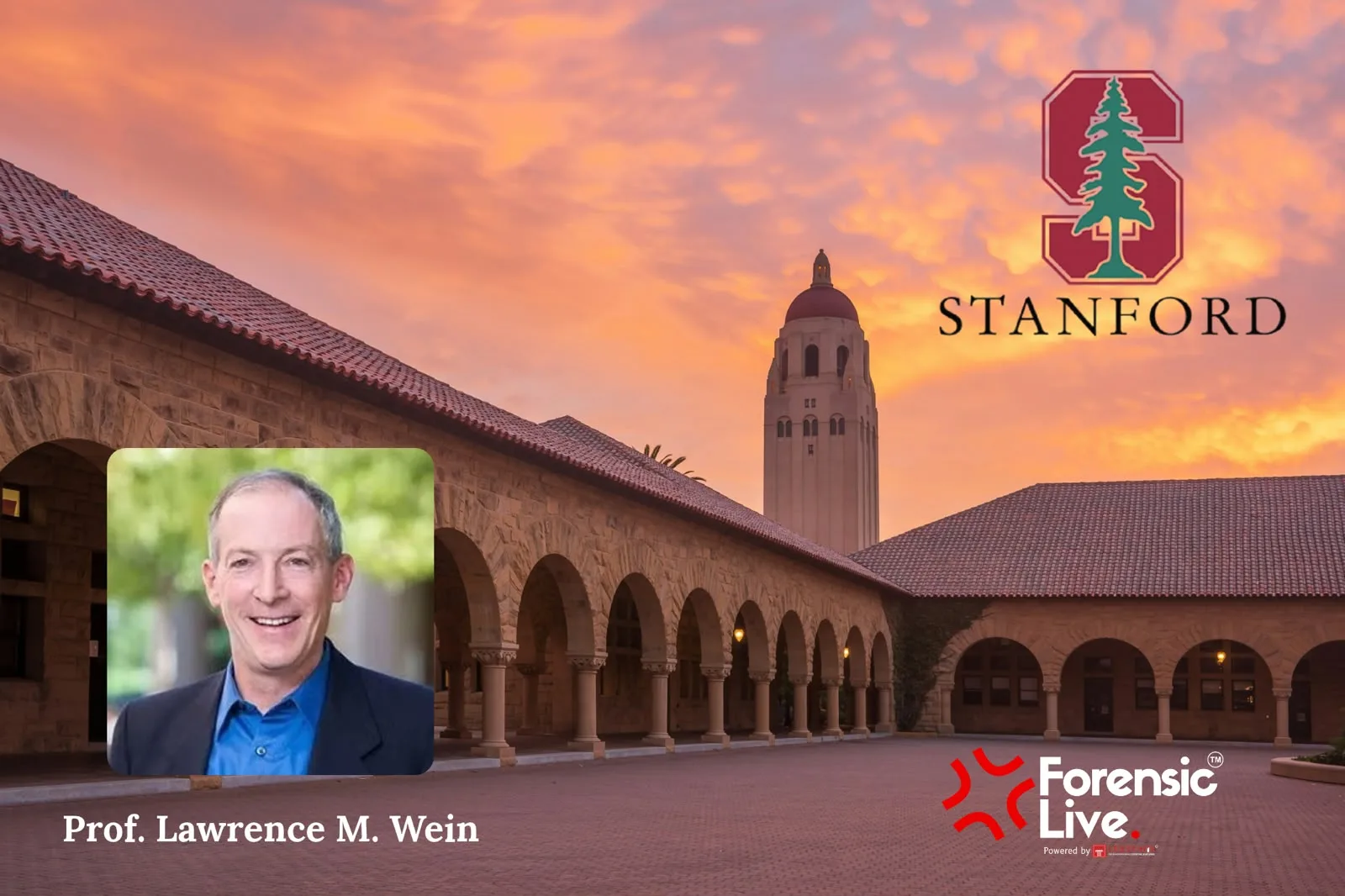
Stanford, USA | A new mathematical algorithm developed by Stanford University professor Lawrence Wein is helping forensic investigators solve complex cold cases more efficiently by accelerating the process of forensic investigative genetic genealogy (FIGG).
The algorithm, known as FIGGsolver, is designed to help investigative genetic genealogists identify the most effective way to navigate extensive family trees and trace potential suspects through DNA matches. By applying mathematical modelling to genealogical research, the technology aims to reduce the time and effort required to identify individuals involved in criminal investigations.
How FIGGsolver Works
Forensic investigative genetic genealogy combines DNA analysis with traditional genealogical research to identify suspects or unidentified individuals. Investigators typically begin by comparing crime-scene DNA profiles against available law enforcement databases. When conventional searches fail to produce a match, genetic genealogy databases can help identify distant biological relatives.
Researchers then construct family trees using historical records, including birth, marriage and death certificates, to narrow down potential identities.
However, examining thousands of possible family connections can be extremely time-consuming. FIGGsolver addresses this challenge by using mathematical models to evaluate different research pathways and guide genealogists towards the most promising ancestral connections.
Cold Case Solved in Just 10 Days
The algorithm was developed by Wein, professor emeritus at Stanford Graduate School of Business, and tested in collaboration with investigative genetic genealogist Barbara Rae-Venter.
One of its significant applications involved a nearly three-decade-old sexual assault case in Cleveland, Ohio. Investigators had spent years attempting to identify the perpetrator through genetic genealogy but were unable to establish a clear connection using conventional approaches.
After Wein applied FIGGsolver to the investigation, the algorithm suggested examining an earlier generation in the suspect's family tree. This direction eventually helped investigators identify a potential family connection, and law enforcement confirmed the perpetrator through DNA evidence obtained from a close relative.
The investigation, which had remained unresolved despite years of research, was reportedly solved in just 10 days with the algorithm's assistance.
Promising Results in Multiple Investigations
Earlier testing conducted by Wein and researcher Mine Su Ertürk, in collaboration with the DNA Doe Project, demonstrated that the mathematical approach could solve cases approximately 10 times faster than existing methods.
Since the Cleveland investigation was resolved in January 2025, Wein and Rae-Venter have reportedly closed another 14 cases using the algorithm.
FIGGsolver does not replace forensic genealogists. Instead, it supports their decision-making by analysing possible research pathways and helping them prioritise the most productive directions. Human investigators must still examine historical records, establish family relationships and verify potential identities through DNA evidence.
The algorithm also has limitations. It does not currently account for geographical information, surnames, ethnicity or certain complex family relationships that may influence genealogical investigations.
Expanding the Role of Mathematics in Forensic Science
Wein is working towards making FIGGsolver more widely available to forensic investigative genetic genealogists. Its wider adoption could help investigative teams process more cases within limited resources and potentially identify suspects who have remained undetected for decades.
The development demonstrates how mathematical modelling and computational methods can strengthen forensic investigations. By making genetic genealogy more efficient, FIGGsolver could become an important tool in resolving violent crime cold cases and bringing long-awaited answers to victims and their families.